The production of a pair of jeans involves much more than cutting and sewing fabric. A professional jeans manufacturing process combines design expertise, fabric selection, pattern development, precision manufacturing, washing techniques, finishing applications, and quality control.
For global fashion brands, choosing the right manufacturing partner means understanding every stage of denim production. A reliable jeans manufacturer should have the technical knowledge, production capacity, and quality systems required to transform a design concept into a finished denim product.
From initial pattern making to final finishing, every step influences the comfort, appearance, durability, and overall quality of jeans.
In this guide, we explore the complete jeans production process and explain how denim garments are manufactured at an industrial scale.
What Is the Jeans Manufacturing Process?
The jeans manufacturing process is the complete production journey of denim garments, starting from product development and fabric selection and continuing through cutting, sewing, washing, finishing, and final inspection.
Unlike standard garment production, denim manufacturing requires specialized expertise because denim fabric changes significantly during washing and finishing processes.
The main stages of jeans manufacturing include:
- Product development and design
- Pattern making
- Fabric selection and preparation
- Cutting
- Sewing and assembly
- Washing and garment treatments
- Finishing operations
- Quality control
- Packaging and shipment
Each stage requires careful planning to achieve consistent quality.
1. Product Development and Design
The first stage of the jeans manufacturing process begins with product development.
Before production starts, brands define:
- Target customer profile
- Collection concept
- Product style
- Fit expectations
- Fabric requirements
- Color and washing effects
- Sustainability requirements
A professional denim manufacturer works closely with brands during this stage to understand the product vision and translate creative ideas into production-ready specifications.
Product development teams analyze trends, customer expectations, and technical requirements to create a successful denim collection.
2. Pattern Making and Fit Development
Pattern making is one of the most important stages in jeans manufacturing.
A pattern defines the shape, measurements, and structure of the final jeans. Even small differences in pattern development can significantly affect:
- Comfort
- Fit
- Movement
- Appearance
- Customer satisfaction
During this stage, technical teams create and adjust:
- Front and back panels
- Waistband structure
- Pocket placement
- Leg shape
- Rise measurements
- Size grading
For global brands, accurate pattern development ensures that jeans maintain consistent fit across different sizes and production batches.
3. Denim Fabric Selection and Preparation
Fabric selection plays a critical role in the final quality of jeans.
Before production, manufacturers evaluate denim fabric based on:
- Composition
- Weight (GSM)
- Stretch level
- Color stability
- Durability
- Texture
- Shrinkage behavior
Different products require different denim characteristics.
For example:
- Premium rigid denim requires structure and durability.
- Stretch denim requires flexibility and comfort.
- Lightweight denim is preferred for seasonal collections.
A skilled denim manufacturer understands how different fabrics behave during cutting, sewing, washing, and finishing.
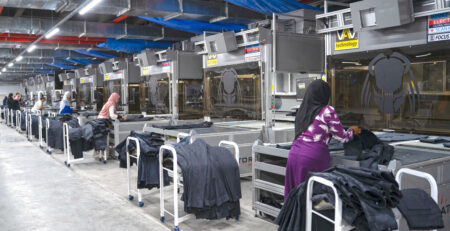
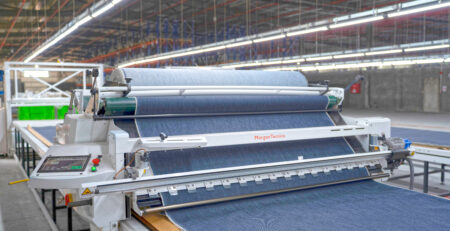
4. Fabric Cutting
After fabric approval, the denim moves into the cutting stage.
Using technical patterns, fabric layers are precisely cut into individual garment components.
The cutting process includes:
- Fabric spreading
- Marker planning
- Automated or manual cutting
- Component preparation
Accuracy during cutting is essential because incorrect measurements can create problems during assembly and affect the final fit of jeans.
Modern jeans factories use advanced cutting technologies to improve efficiency, reduce fabric waste, and maintain consistency.
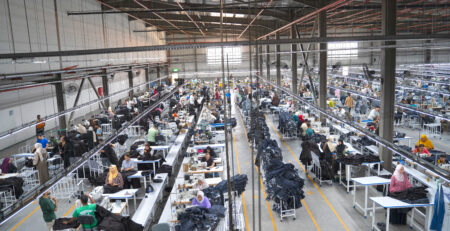
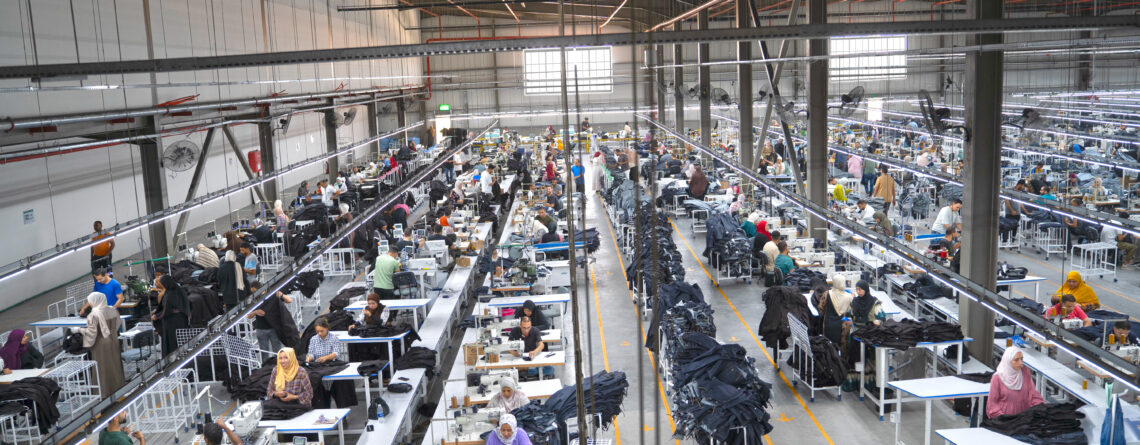
5. Sewing and Garment Assembly
Sewing is where individual fabric components become a complete pair of jeans.
The sewing stage includes assembling:
- Front panels
- Back panels
- Pockets
- Waistbands
- Belt loops
- Zippers or buttons
- Decorative stitching
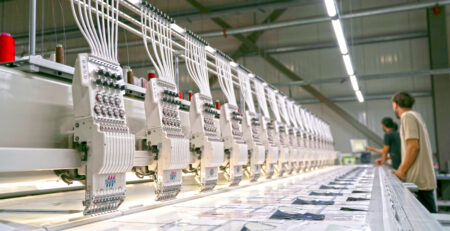
Denim sewing requires specialized equipment because denim fabrics are heavier and more durable compared to many other garment materials.
Important quality factors during sewing include:
- Stitch strength
- Seam durability
- Thread selection
- Construction accuracy
- Consistent measurements
Experienced manufacturers carefully monitor sewing quality to ensure long-lasting products.
6. Denim Washing Process
The washing stage is one of the most distinctive parts of the denim manufacturing process.
Unlike many garments, jeans often achieve their final appearance after washing and finishing treatments.
The washing process can create:
- Different color shades
- Softness
- Vintage effects
- Fade patterns
- Unique surface textures
Common denim washing techniques include:
Stone Washing
Creates a softer texture and worn-in appearance.
Enzyme Washing
Uses enzymes to improve softness and create controlled fading effects.
Bleach Washing
Creates lighter color effects by reducing indigo intensity.
Rinse Washing
Maintains a cleaner denim appearance while improving fabric comfort.
Laser Finishing
Creates precise visual effects with reduced water usage compared to some traditional methods.
A professional jeans manufacturer carefully manages washing parameters because small variations can significantly impact the final product.
7. Denim Finishing Process
After washing, jeans go through finishing operations to improve appearance, performance, and durability.
The denim finishing process may include:
- Softening treatments
- Pressing
- Final shaping
- Trimming loose threads
- Adding labels and accessories
- Final appearance adjustments
Finishing ensures that jeans meet the brand’s quality expectations before shipment.
8. Quality Control in Jeans Manufacturing
Quality control is a critical part of professional jeans production.
A reliable manufacturer checks quality throughout the entire production process, not only at the final stage.
Key inspection points include:
Fabric Quality Control
Checking:
- Color consistency
- Fabric defects
- Stretch performance
- Shrinkage levels
Sewing Quality Control
Checking:
- Stitch strength
- Seam construction
- Pocket alignment
- Measurement accuracy
Washing Quality Control
Checking:
- Color results
- Washing consistency
- Fabric performance
- Final appearance
Final Inspection
Before shipment, finished jeans are inspected according to brand requirements and quality standards.
9. Technology in Modern Jeans Manufacturing
Technology has transformed the way denim products are manufactured.
Modern jeans manufacturing uses digital solutions for:
- Production tracking
- Quality monitoring
- Efficiency analysis
- Inventory management
- Process optimization
AI-supported systems and digital production monitoring help manufacturers identify potential issues faster and improve overall production consistency.
For global brands, technology provides greater transparency throughout the supply chain.
10. Sustainable Jeans Manufacturing
Sustainability has become a key consideration in the denim industry.
Traditional denim production can require significant water, energy, and chemical usage. Therefore, modern manufacturers focus on improving environmental performance.
Sustainable denim manufacturing practices include:
- Water recycling systems
- Energy efficiency
- Responsible chemical management
- Reduced production waste
- Renewable energy solutions
For brands today, selecting a jeans manufacturer with strong sustainability practices is becoming increasingly important.
How Long Does the Jeans Manufacturing Process Take?
The production timeline depends on several factors:
- Product complexity
- Order quantity
- Fabric availability
- Washing requirements
- Quality approval process
A typical jeans production timeline may include:
- Product development
- Sampling
- Fabric preparation
- Bulk production
- Washing
- Quality inspection
- Shipment
Experienced manufacturers improve efficiency by managing these stages through integrated production systems.
Why Choosing the Right Jeans Manufacturer Matters
The quality of a finished pair of jeans depends on every stage of production.
A reliable jeans manufacturer provides:
- Denim expertise
- Advanced production capabilities
- Consistent quality
- Product development support
- Sustainable manufacturing solutions
- Transparent communication
For fashion brands, the right manufacturing partner helps transform creative concepts into commercially successful denim collections.
EG (Eroğlu Garment): Integrated Jeans Manufacturing Partner
EG (Eroğlu Garment) provides integrated denim and apparel manufacturing solutions for global brands.
With its manufacturing operations in Egypt and decades of textile expertise from Eroğlu Global Holding, the company supports brands throughout the complete jeans manufacturing process.
From pattern making and product development to cutting, sewing, washing, finishing, and quality control, EG (Eroğlu Garment) offers a complete production approach designed for international fashion brands.
By combining Turkish textile know-how, modern technology, sustainable production practices, and scalable manufacturing capabilities, EG (Eroğlu Garment) works as a long-term production partner for brands seeking reliable denim manufacturing solutions.